Three configurations, two seats—or just one
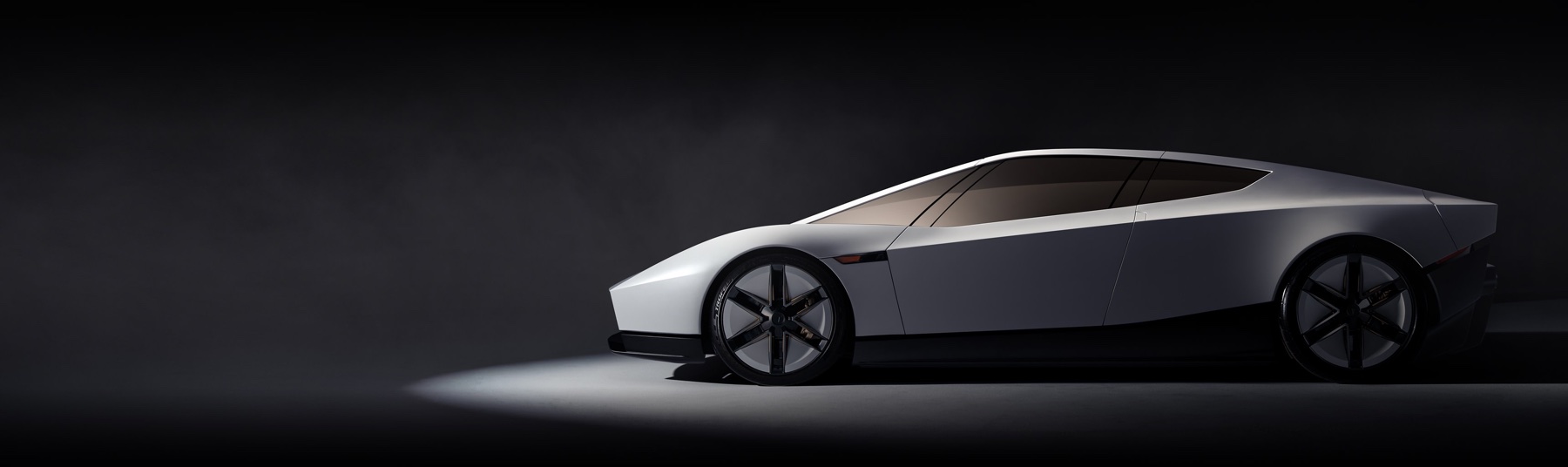
The current Roadster is not simply the red 2017 prototype in another color. Tesla lists Performance and two augments, Thrust and Rocket. Performance and Thrust seat two people including the driver; Rocket has only the driver’s seat. The airborne configuration does not accommodate a passenger.
Performance combines active aerodynamics and suction. Thrust adds rear cold-gas propulsion. Rocket places thrusters around the vehicle for forward, upward and rotational movement. It is invitation-only, region-dependent and explicitly not approved for public-road use. Features are not standard on every Roadster.
| Configuration | Total occupants | Tesla’s description |
|---|---|---|
| Performance | 2 | Active aero and suction; road-oriented configuration. |
| Thrust | 2 | Rear thruster augment; claimed sub-1-second 0–60 mph. |
| Rocket | 1 | Perimeter thrust and airborne movement; invitation only, not approved for public roads. |
Downforce before the car starts moving
Tesla describes fans and an underbody sealing system that extract air to generate downforce even at rest. Active aero and Track Mode alter the car’s behavior through ride-height, suspension, downforce and drag settings.
Cold-gas thrust is a separate system using stored gas and electrical actuators. It is not a combustion engine or a promise of unlimited flight. A useful QA question is what remains available as the gas reserve decreases or ground sealing changes.
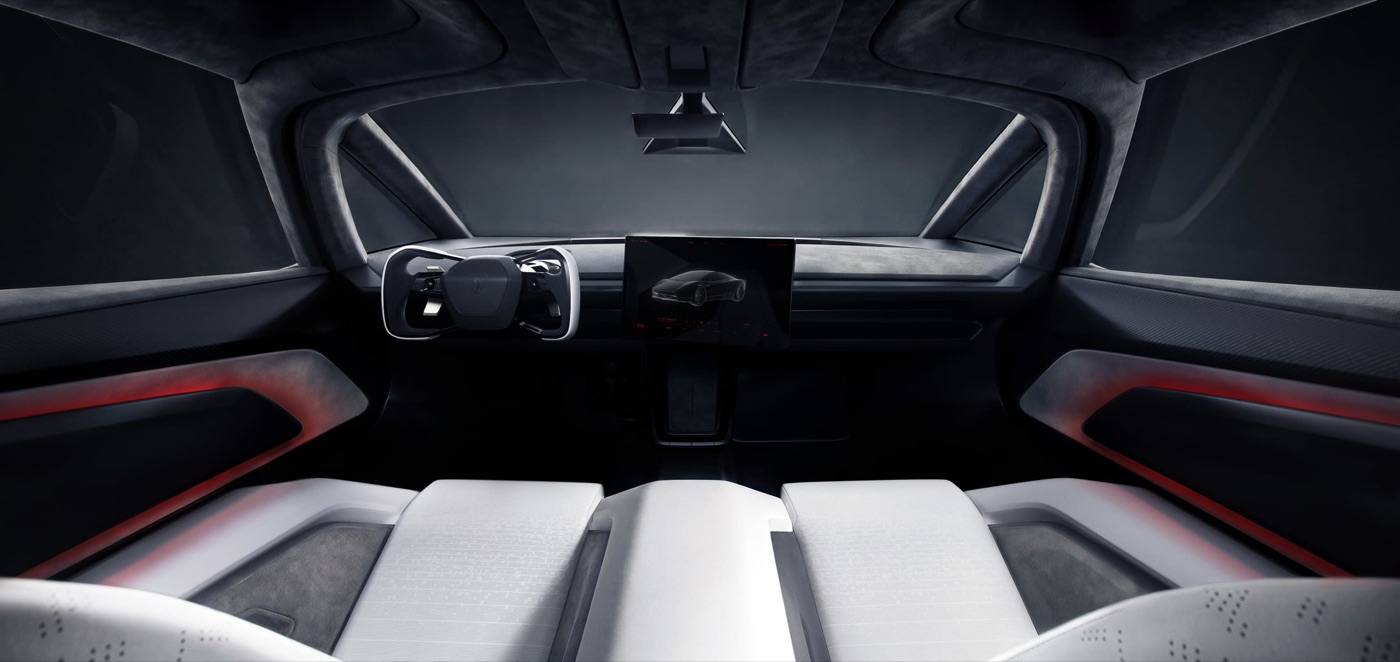
Tesla also shows concealed headlights, a continuous rear light, gold-tinted glass and an Ultrawhite cabin. It describes magnesium, titanium, carbon fiber and fixed seating positions as mass-saving choices. Access, visibility, comfort and maintenance deserve assessment alongside appearance.
Range, charging and speed: reading the figures
Tesla’s specific Thrust claim is under one second from 0 to 60 mph, approximately 96.6 km/h. It is not a 0–100 km/h time or a Treseko measurement.
Top Gear’s pre-event visit reports 310–320 miles of range by model, about 499–515 km, and 500 kW charging with 15–80% in under 15 minutes. These are reported figures, not an EPA/WLTP rating or a charging curve we verified. It also describes two rear motors and rear-wheel drive.
Autocar Professional reports a speed target above 230 mph, around 370 km/h, and a 2028 production ambition. Neither is guaranteed delivery. Final battery capacity, variant pricing and complete performance conditions are not consolidated in the official page we reviewed.
Top Gear’s 0.59-second Rocket estimate is not the same claim as Tesla’s sub-one-second Thrust figure. Comparisons need the configuration, timing protocol and whether rollout—the initial movement before timing begins—was excluded.
Nine years later: what changed and what remains open
The November 2017 concept had a different proposal, including 2+2 seating and different range claims. Search results quoting four seats or 620 miles may describe that earlier car. Wikipedia is useful for history and references, but sections can mix project stages; current manufacturer documentation takes priority for variant identification.
International coverage offers complementary perspectives: AP reports the event; Top Gear examines engineering; Autocar Professional summarizes executives’ explanations; Cadena SER reports for Spanish-speaking readers. None replaces an approval dossier or an independent comparative test.
The practical choice is between a two-seat sports car and a single-seat configuration with unusual capabilities and restrictions. Ask what it can repeat reliably, where and under which limits.
A demonstration is not a test report
A video can document one maneuver under particular conditions. It does not establish repeatability, safety margins, failure behavior or durability. A controlled exhibition and everyday road use expose people to different risks.
Useful evidence identifies the vehicle, hardware, software, predefined acceptance criteria, calibrated instruments, conditions and deviations. The important question is what happens outside the successful demonstration, including when a component fails.
There is no universal ladder of certifications
Verification, intended-use validation, regulatory compliance and voluntary ratings are distinct. In the US, manufacturers certify compliance with applicable FMVSS; NHTSA does not preapprove each vehicle model. Registration and use also involve local rules. EU type approval involves authorities, technical services and production conformity.
Euro NCAP ratings inform consumers; stars are neither road licenses nor flight permissions. A reservation, patent or performance claim does not replace the documents covering the specific vehicle variant.
Airborne operation raises another regulatory question
Leaving the ground does not by itself determine an aircraft category. The competent authority must assess the design and proposed operation. Calling the Roadster an eVTOL or powered-lift aircraft without that determination would be premature.
Where aviation rules apply, design, production, airworthiness, operations and pilot qualifications can require separate authorizations. FAA advanced-air-mobility guidance distinguishes those areas. A demonstration permit need not allow routine operation. We cannot verify such authorizations for this Roadster.
A proposed test matrix
This matrix is our risk-based editorial analysis, not a record of Tesla tests or a complete legal compliance program. Protocols, limits, samples and laboratories depend on the design, market and applicable regulatory edition.
High-risk physical testing belongs in authorized facilities with qualified teams, protecting occupants, staff and bystanders. Abort criteria and unsuccessful runs matter as much as the best result.
| Area | Question | Expected evidence |
|---|---|---|
| Braking and stability | What changes with water, load, temperature or loss of regeneration? | Instrumented records, conditions and repeatability. |
| Occupants and structure | What are the impact and evacuation risks? | Applicable test reports and protection assessment. |
| Battery and high voltage | Are electrical and thermal failure risks controlled? | Measurements, protections and emergency documentation. |
| Gas and airborne functions | Are leaks, unintended activation and bystander exposure addressed? | Hazard analysis and authorized-facility validation. |
| Sensors and control | What happens with invalid signals, power loss or incorrect mode? | Fault-injection traces and defined safe response. |
| Cybersecurity and OTA | Are unauthorized changes blocked and updates assessed? | Version control, threat assessment and regression. |
| Durability and environment | Does behavior remain acceptable under wear, water or vibration? | Test series, inspections and operating limits. |
| Production | Does each unit preserve the assessed configuration? | Component identification, controls and deviations. |
Software, batteries and updates
Electrical and battery safety must use the applicable rules and effective dates, including the US transition from FMVSS 305 to 305a and UN R100 where applicable. Do not assume every new rule already applies to every category.
ISO 26262 addresses functional safety; ASIL A–D are risk-derived integrity levels, not road permits. ISO 21448 addresses limitations of intended functionality. UN R155 and R156 address cybersecurity and update management where adopted. Mentioning these frameworks does not establish Roadster compliance. Every update needs an impact assessment and appropriate regression evidence tied to the tested version.
From requirements to a defensible decision
Start with intended uses, hazards and measurable requirements; then design review, simulation and bench testing; then integration and controlled validation. Gather market-specific compliance evidence and maintain production conformity. This is a proposed engineering sequence, not official certification levels.
Failures require recorded deviations, analysis, correction and retesting. Approval of one configuration cannot silently extend to the next. Field incidents, maintenance and updates remain part of the evidence throughout the lifecycle.
What about Argentina?
Category, variant and import or commercialization route determine the procedure. Decree 196/2025 addresses LCM, LCA, CSV and recognition of foreign documentation under conditions. An overseas unveiling does not automatically authorize local use.
Confirm the documents accepted for the specific vehicle with the competent authority, alongside registration and operating requirements. Road permission does not settle aviation permission. We have not verified a Roadster-specific Argentine approval.
A traceability example in Treseko
Fictional example: build EV-QA-DEMO-01 includes a requirement preventing an operating mode incompatible with the defined safe state. Record preconditions, action and expected result; the execution retains the observed result and evidence. Initially the test is pending, never automatically passed.
An external laboratory report can be attached with its tested configuration. A failed criterion links to an incident; keep the original run and verify the correction in a new run. Treseko organizes cases, executions, bugs and evidence. It does not perform crash or flight testing, grant type approval or claim ISO 26262 tool certification. This is not a Tesla customer story.
Questions readers should ask
Can I buy it to fly on public roads? An unveiling does not prove that: verify the actual variant, delivery and local authorizations. Are software tests enough? No; safety also involves hardware, energy, mechanics, people and environment. Request variant identification, relevant test reports, approval scope, operating restrictions and covered software version.
Treseko editorial team · updated October 16, 2026. Independent documentary research without Tesla affiliation. Official current-model imagery credited to Tesla. Performance statements are identified as manufacturer claims or press reports; QA scenarios are our proposals, not tests we performed.